

The short answer: Choose an AI keynote speaker on four checks: the talk fits where your organization is with AI, the speaker has a real stage record, the audience leaves able to do something different, and the fee matches the event's stakes. Name the job the session has to do first, then judge every candidate against it.
Last updated: November 24, 2026 · By the Change Fluency editorial team
Every speaker roster now lists dozens of AI speakers. Almost all of them can explain what AI is, so that stopped being a filter a while ago. The real filter is narrower, and most planners only find it after a keynote that got polite applause and changed nothing on Monday. If you're planning an event and want the short version of how we work with organizers, start with our guide for event planners.
What does an AI keynote speaker actually do?
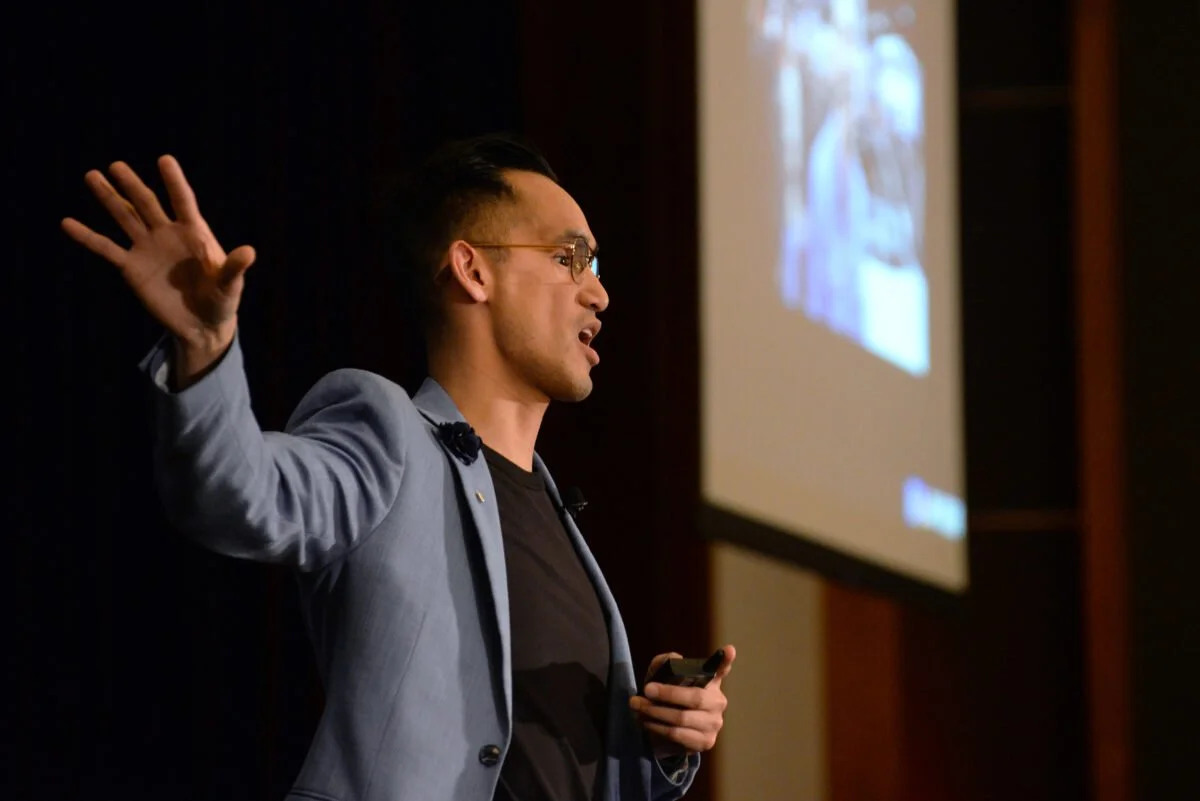
An AI keynote speaker helps a business audience understand what AI means for their work and, in the stronger versions, helps them act on it before they leave the room. The format is still a keynote: one speaker, one stage, usually 30 to 60 minutes.
It sits between two neighbours that often get confused with it:
A technical AI talk is built for researchers and engineers who want depth on models and benchmarks. Booked for a leadership offsite, it usually produces a polite, confused room.
A futurist talk stretches the audience's sense of what's coming. It's great for scene-setting and weaker when the event needs a decision made this quarter.
An AI keynote is built for people who have to decide or change something afterward. That's why the job matters more than the name.
What job does your AI keynote need to do?
Most AI keynotes do one of three jobs, and each calls for a different kind of speaker.
Inspire and orient. The audience is early. They need a credible, hype-free picture of where AI is heading in their industry.
Decide and prioritize. Leadership knows AI is coming and needs a way to choose where to invest, what to ignore, and what to do first.
Adopt and act. Tools are already licensed and usage has stalled. The room needs to leave using something, not hearing another overview.
The third job is the one more events now have. In McKinsey's State of AI 2026 survey, nearly nine in ten respondents say their organizations use AI regularly, but only 44 percent say it's scaling across the enterprise. Most organizations have moved past "should we use AI" to "why hasn't it stuck." We dig into one reason in why employees sabotage AI rollouts.
| The job | Speaker who fits | What the room leaves with |
|---|---|---|
| Inspire and orient | Futurist or well-known technical name | A shared picture of where AI is heading |
| Decide and prioritize | Strategist or former practitioner | A way to choose what to invest in and what to ignore |
| Adopt and act | Change-focused, hands-on speaker | Something working, built during the session |
What are the four checks that predict a good AI keynote booking?
Topic fit, a real stage record, actionability, and a fee that matches the stakes. Run every candidate through all four before you compare names.
1. Topic fit for where the room actually is. Ask for the talk outline, not the bio. Check it against where your organization is today: early awareness, choosing priorities, or stuck adoption. A talk built for 2023's "AI is coming" moment still gets booked because nobody checked the deck.
2. A real stage record. Look for paid corporate and conference keynotes, not just podcasts or a large online following. A following builds trust quickly. It doesn't prove someone can hold a ballroom of people who didn't choose to be there.
3. Actionability. Does the audience leave with a decision framework, or better, something they built? A keynote that ends in applause and a group photo gets a good survey score and no behaviour change. A keynote that ends with a team demoing a working AI tool gets the speaker rebooked.
4. Bookability and fee. Confirm realistic availability and the full fee before falling for a speaker who is three times the budget. In our shortlist of AI keynote speakers, reported fees run from about $20,000 to well past $75,000 for the most in-demand names. Fee follows demand and fame more than it follows fit for your room.
Should an AI keynote include a hands-on session?
If the job is adoption, yes. Training is one of the biggest gaps in most AI rollouts, and a talk alone can't close it.
Boston Consulting Group's AI at Work 2025 survey found regular AI use among frontline employees has stalled at 51 percent, and only 36 percent of employees feel adequately trained. Employees who got five or more hours of training, especially in person and with coaching, were much more likely to become regular users.
That's why some AI keynotes now pair the talk with a short, structured build: teams use everyday tools like ChatGPT, Copilot, Claude or Gemini to solve a real problem they have, then demo it before lunch. No coding. The room leaves with something working, not a memory of a good talk.
Jay Kiew, who founded The Change Fluency Co., runs this format as an AI Hackathon paired with his EVOLVE keynote: a 90-, 120- or 180-minute build sprint where teams pick a real problem, build a working version with tools they already use, and pitch it. It's one example of the pattern. Whoever you book, if the job is adoption, ask every candidate whether a hands-on option exists.
What questions should you ask an AI keynote speaker before booking?
"Can I see the actual outline for our event?" A generic deck is a warning sign. You're paying for a talk shaped to your room.
"What will the audience leave with?" A good answer names a framework, a tool, or a decision they can act on this quarter. "Inspiration" alone means the talk wasn't built for outcomes.
"Is there a hands-on or workshop option?" Even if you only book the keynote this year, the answer shows whether the speaker thinks about adoption or only about the stage.
"What's the most recent event you did in our industry?" Recency beats volume. Fifty AI talks in 2023 can still mean 2023 material.
"What does the fee include?" Confirm travel, any hands-on add-on, and whether the quote is the full engagement or a starting point.
What's the most common mistake when booking an AI keynote speaker?
Booking for credibility instead of fit. A famous résumé, a bestselling book or a big-name former employer always looks like the safe choice on paper. A room stuck between pilots and real adoption doesn't need another expert explaining what AI is. It needs someone who gets them building.
Keep credibility on the list. Just rank it behind topic fit and actionability for the room you actually have.
If you've decided the job is adoption, here's how Jay's EVOLVE AI keynote works. To check dates and fit for your event, contact The Change Fluency Co.
Frequently asked questions
What is an AI keynote speaker?
A speaker who helps a business audience understand what AI means for their industry or role and, in the stronger versions, helps them act on it, sometimes through a paired hands-on session. It differs from a technical AI talk, which is built for researchers and engineers, and from a futurist talk, which focuses on long-range trends.
How do I choose an AI keynote speaker?
Name the job first: inspire, decide, or adopt. Then check candidates on topic fit for where your organization is with AI, a real stage record, whether the talk produces action rather than applause, and a fee that matches the event's stakes.
Should an AI keynote include a hands-on workshop?
If the goal is awareness, a keynote alone is usually enough. If the goal is adoption, pairing the keynote with a short, structured build gives the audience something working before they leave, which a talk alone can't.
How much does an AI keynote speaker cost?
Reported fees for credible AI keynote speakers start around $20,000 and run well past $75,000 for the most in-demand names, depending on demand, format and whether a hands-on add-on is included. Confirm the current figure with the speaker or their bureau.
Is a famous AI speaker always the right choice?
No. Name recognition predicts excitement in the room, not what changes afterward. The right speaker is the one whose talk is built for the job your event needs done.
Written by the Change Fluency editorial team. The Change Fluency Co. is Jay Kiew's company, and Jay is one of the speakers this guide could point you to.
